Why Solar Backup Is No Longer Optional
Grid outages are getting longer. Fuel prices keep rising. Gas generators kill 80+ Americans per year from CO poisoning. Solar generators solve all three problems - silently, safely, and for free after the initial investment.
What Exactly Is a "Solar Generator"?
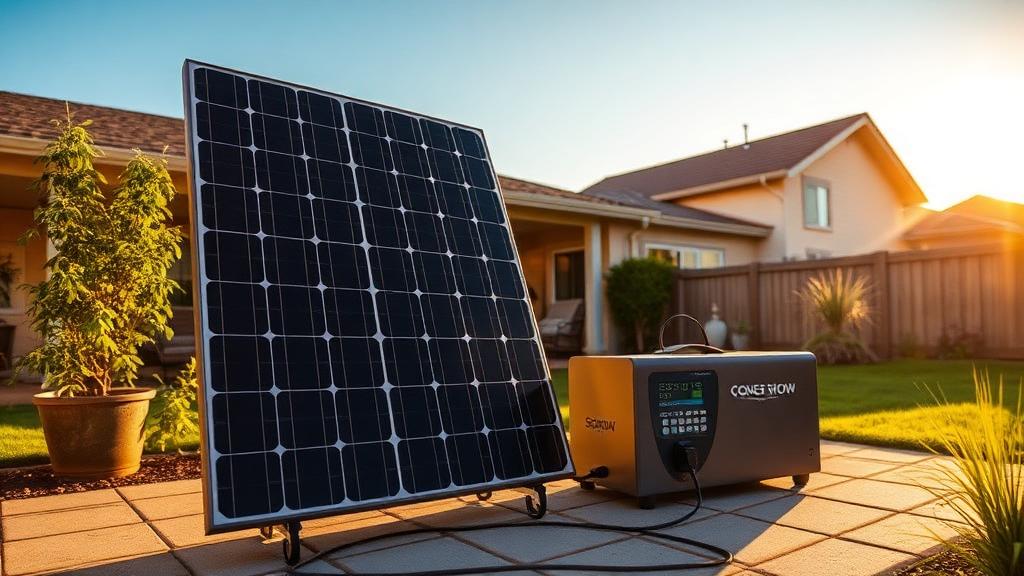
A solar generator is a portable power station + solar panels. The power station stores energy in a lithium battery. The solar panels convert sunlight into electricity to charge it. Together, they give you free, renewable backup power - no fuel, no fumes, no noise.
Key insight: Solar panels don't generate power at night - but the battery stores enough from the day to run essentials through the night. And if solar input exceeds your consumption during the day, you get effectively infinite runtime.
Solar vs Grid vs Gas Generator
The real comparison people should be making - not just solar vs gas.
| Feature | ☀️ Solar Gen | 🔌 Grid Only | ⛽ Gas Gen |
|---|---|---|---|
| Fuel Cost | $0 - sunlight is free | $0.16/kWh avg. (rising 3%/yr) | $5–15/day in fuel |
| Outage Protection | ✅ Runs independently | ❌ Goes down with the grid | ✅ Runs independently |
| Noise | 0 dB - silent | N/A | 65–80 dB (lawn mower) |
| Emissions | Zero | Grid-dependent | CO₂ + CO risk |
| Indoor Safety | ✅ Safe anywhere | N/A | ❌ CO poisoning risk |
| Maintenance | Wipe panels occasionally | None | Oil, filters, fuel stabiliser |
| Upfront Cost | $1,400–3,500 (panel+station) | $0 | $400–800 |
| 5-Year Total Cost | $1,000–2,500 (after tax credit) | $3,500–7,000 in bills | $1,500–3,800 + maintenance |
| Runtime (heavy loads) | Battery-limited (4–12 hrs night) | Unlimited (when on) | 8+ hrs per tank |
Solar Runtime Calculator
See exactly how long a solar generator will power your home - during the day with solar, and overnight on battery alone.
Solar Value by Region
Your location dramatically affects payback time. Here's how US regions compare.
Southwest (AZ, NV, CA)
ExcellentBest ROI - 6+ peak sun hours, tax credit + state incentives
Southeast (FL, TX, GA)
Very GoodStrong sun + frequent storms = high outage protection value
Midwest (OH, IL, MO)
GoodSeasonal variation, but still cost-effective over 5 years
Northeast (NY, MA, PA)
FairShorter winters, but storms + grid aging boost the value case
Pacific NW (WA, OR)
ModerateLess sun, but wildfire PSPS shutoffs make backup essential
When Does It Pay for Itself?
Based on a $2,400 solar generator setup (power station + 400W panels) with 30% tax credit.
High-sun state + outage-prone
4 year paybackAverage sun + moderate outages
6 year paybackLow sun + rare outages
9.3 year paybackThe Honest Pros & Cons
Why It's Worth It
Where It Falls Short
What Real Owners Say
"Our 400W panel setup paid for itself after Hurricane Helene. Neighbours ran out of gas - we had power for 4 days straight."
"I calculated it out. Solar + battery cost me less over 3 years than the gas generator I was refuelling every storm season."
"The 30% tax credit sealed it. $720 back on a $2,400 setup. It's basically subsidised peace of mind."
Common Objections - Answered Honestly
We hear these questions constantly. Here are the straight answers.
Best Solar-Compatible Models by Capacity
All models below support solar panel charging. Match capacity to your calculator result above.
The Verdict: Are Solar Generators Worth It?
Yes — for most US households.
After the 30% tax credit, a $2,400 solar generator setup costs $1,680. At $280–420/yr in fuel and outage savings, it pays for itself in 4–6 years — then delivers free power for another decade.