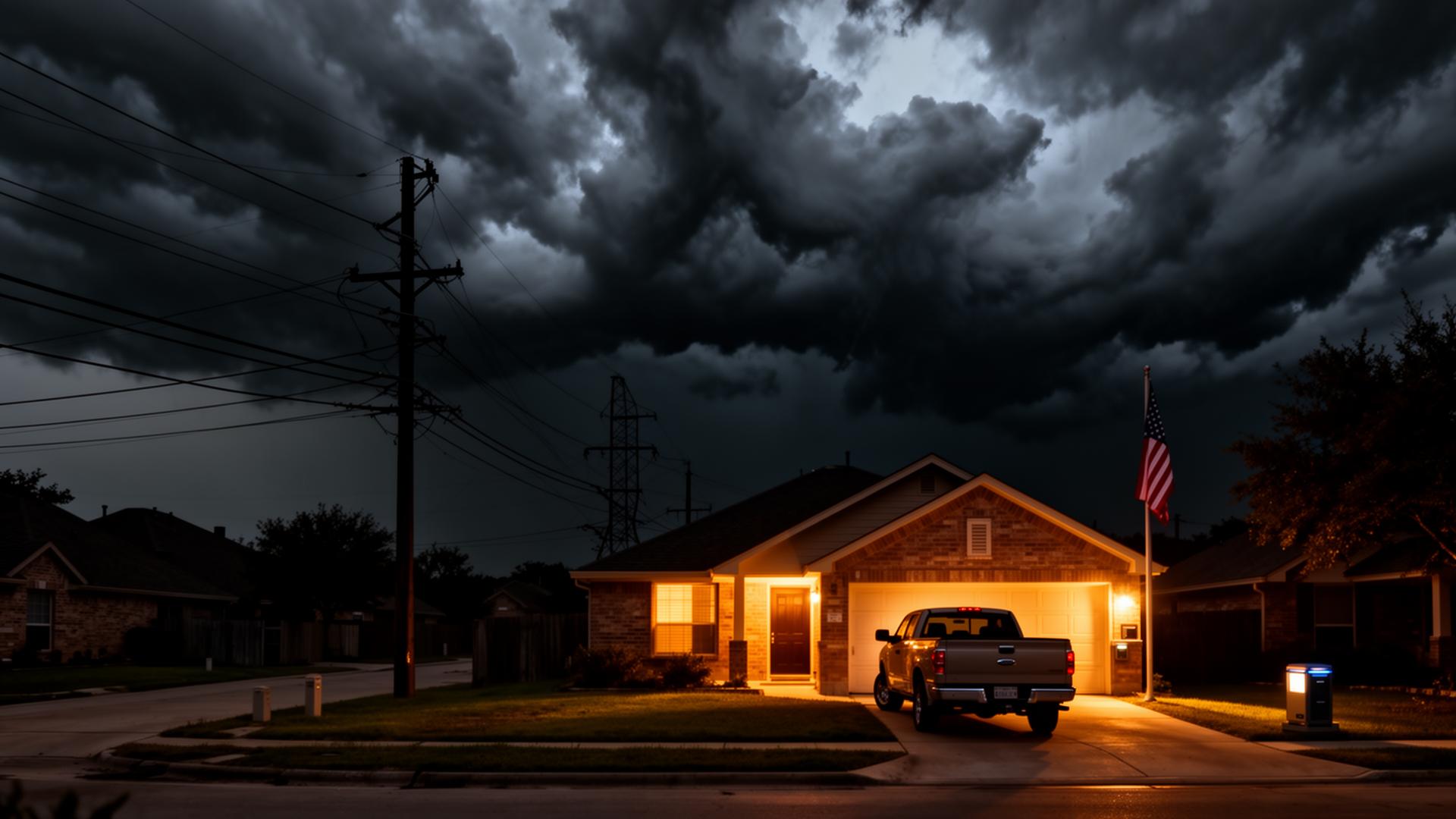
Texas Has a Power Problem
4.5M
homes lost power
Winter Storm Uri (2021)
42
hours (Uri)
Average outage duration
12+
conservation alerts
ERCOT grid warnings (2024)
5.5
hrs/day
Peak sun hours (TX avg)
Why Texas Is Different: The ERCOT Island
Texas operates its own electrical grid (ERCOT), disconnected from the rest of the US. This means when demand spikes or supply drops, there's no backup from neighboring states.
🌪️ What Causes Texas Outages?
The top 5 threats to your power — and when they hit.
Summer Heat Waves
Jun–SepERCOT grid strain from A/C demand - rolling blackouts when demand exceeds 80GW capacity
Winter Ice Storms
Dec–FebFrozen natural gas lines, iced wind turbines, burst pipes - catastrophic multi-day failures
Hurricanes & Tropical Storms
Jun–NovCoastal flooding, downed transmission lines, widespread infrastructure damage
Severe Thunderstorms
Mar–JunTornadoes, hail, wind damage to distribution lines — frequent short-to-medium outages
Grid Equipment Failures
Year-roundAging transformers, transmission bottlenecks, and ERCOT demand miscalculations
⏱️ Texas Outage Action Plan
What to do hour-by-hour when the power goes out.
First Hour: Assess & Act
Start battery. Connect fridge, fans/heater, lights. Check ERCOT outage map. Text family.
Short Outage: Conserve
Keep fridge closed. Use battery for essentials only. Deploy solar panels if daytime.
Extended: Adapt
Solar recharging during day. Rotate non-essentials. Budget 40% battery for overnight.
Multi-Day: Survive
Solar cycle established. Use cooler for perishables. Conserve water if on well/pump. Check on neighbors.
Long-Term: Hunker Down
Uri lasted 4+ days for many. Solar provides indefinite essential power. Consider evacuation if unsafe.
🌡️ Season-by-Season: What You'll Actually Need
Texas outages hit different depending on the season.
Summer (Jun–Sep)
Essentials to Power
Fridge, fans, lights, phones, Wi-Fi
Total load: 435W
Runtime Estimates
Challenge
A/C is the #1 load — a window unit pulls 500W alone
Pro Tip
Use fans + ice + damp towels instead of A/C to stretch runtime 4×
Winter (Dec–Feb)
Essentials to Power
Fridge, electric blankets, lights, phones, Wi-Fi
Total load: 455W
Runtime Estimates
Challenge
Space heaters draw 1,500W — will drain a battery in 1–2 hours
Pro Tip
Use electric blankets (200W) instead of space heaters (1,500W) — 7.5× more efficient
Hurricane Season (Jun–Nov)
Essentials to Power
Fridge, lights, phones, Wi-Fi, sump pump (if needed)
Total load: 1055W
Runtime Estimates
Challenge
Multi-day outages with no solar (overcast) — need maximum capacity
Pro Tip
Pre-charge to 100%, fill bathtubs with water, freeze water bottles for cooler backup
🔋 Texas Outage Runtime Calculator
Select your appliances and battery to see how long you'll last — with Texas solar potential.
Select Your Appliances
Total load: 495W
Battery Capacity
2,048 WhSolar Panel Watts
Peak Sun Hours (TX avg: 5.5)
5.5hBattery Only
3.5h
Battery + Solar
4.9h
Solar generates ~1,870 Wh/day
⚡ 7 Reasons Every Texas Home Needs a Battery Backup
ERCOT is an island - no federal safety net
When the Texas grid fails, there's no power to import. You're on your own.
Extreme heat kills faster than cold
Texas summer heat is dangerous. A fan + fridge running on battery can save lives.
Winter storms aren't going away
Climate change is making polar vortex events more frequent. Uri wasn't a once-in-a-lifetime event.
Hurricane season is 6 months long
June through November, Gulf Coast Texas faces multi-day outage risk every year.
Texas has the best solar potential in the US
5.5 peak sun hours means solar panels recharge batteries fast — even in winter.
Food spoils fast in Texas heat
Your fridge contents can spoil in 2 hours above 90°F. A battery keeps food safe for 12+ hours.
Insurance won't replace peace of mind
A $1,500 battery station is cheaper than one insurance deductible - and it works when you need it.
🏆 Top 5 Battery Stations for Texas
Tested against Texas-specific scenarios — heat, hurricanes, and ice storms.
EcoFlow DELTA Pro
The only portable unit that can run a window A/C. Expandable to 7.2 kWh with extra battery. Smart home panel available for automatic switchover.
Read Full ReviewEcoFlow DELTA 2 Max
Handles fridge + fans + lights + devices with room to spare. Fast 1-hour charge, expandable to 6 kWh. X-Boost handles up to 3,100W.
Read Full ReviewBLUETTI AC200L
1,200W solar input — charges in under 2 hours in Texas sun. LiFePO4 battery handles heat better. Power Lifting to 3,600W.
Read Full ReviewJackery Explorer 1000 Plus
Light enough for one person to carry. Perfect for apartments, condos, or evacuations. Expandable with extra batteries.
Read Full ReviewAnker SOLIX F2000
HyperFlash charges 0–80% in 43 minutes. Perfect when storms give short warning. Handles Texas heat well.
Read Full Review📊 Capacity at a Glance
✅ Texas Storm Readiness Checklist
Tap each item as you complete it. Get to 100% before the next alert.
❓ Texas Power Outage FAQ
Can a portable power station run an air conditioner in Texas?
How long will a backup battery last during a Texas summer outage?
Is the Texas grid (ERCOT) reliable?
What's the best battery chemistry for Texas heat?
Can solar panels charge a battery during a Texas hurricane?
How do I prepare for a Texas winter storm outage?
Don't Wait for the Next Storm
Winter Storm Uri gave zero warning. The next grid failure could come from heat, hurricanes, or ice. Get prepared now.