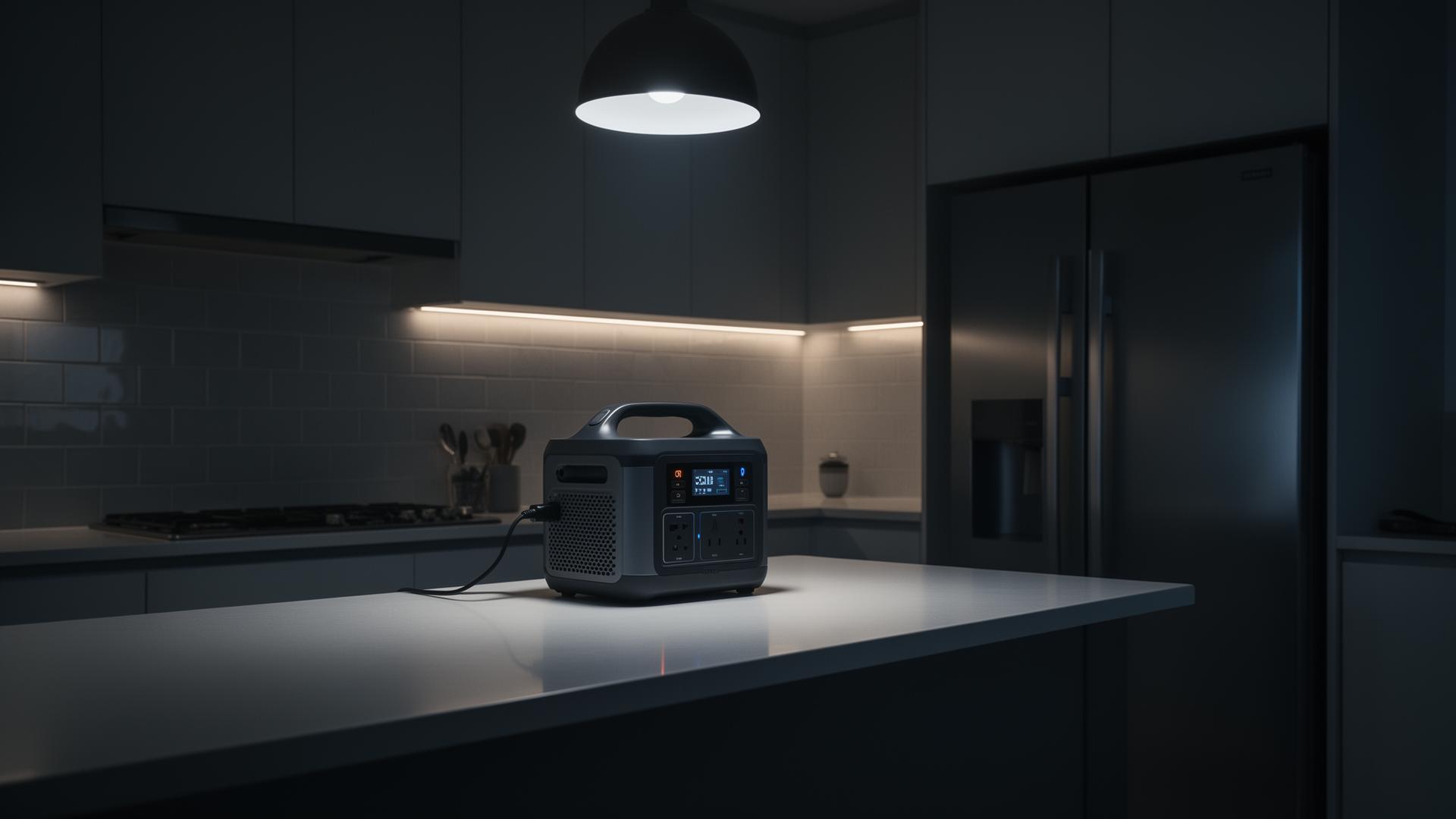
The power goes out. The clock starts ticking. Your fridge is full of groceries, and you're wondering: how long do I have before things start going bad?
The short answer: about 4 hours if you keep the door closed. After that, it depends on what you do next. This guide covers exactly what happens, when to worry, and how a portable power station can take the stress out of the whole thing.
How Long Food Stays Safe Without Power
Source: USDA Food Safety guidelines · Times assume door stays closed
What Happens Hour by Hour
Here's the timeline of a fridge during a power outage - and when things start getting risky.
Fridge is fine - don't panic
A closed fridge stays safe for about 4 hours. Freezer is fine for 24–48 hours if full. Don't open the door.
Temperature starts rising
Food above 4°C / 40°F begins entering the danger zone. If you have a power station, now is when it earns its keep.
Risk zone without power
Without backup power, perishables need to go. With a 2,000Wh+ station, your fridge is still running comfortably.
Extended outage territory
Solar panels or a generator become important. A fully charged 3,600Wh station with solar can keep a fridge going indefinitely in good conditions.
Food Safety Countdown
Estimate how long your food stays safe without power
Rough estimate based on USDA guidelines · Actual times vary by fridge model, insulation, and room temperature
4 Ways to Power a Fridge During an Outage
Not all options are equal. Here's how they compare.
Portable Power Station
Best- Silent, indoor-safe
- Handles surge well
- Solar-rechargeable
- Powers other devices too
- Upfront cost ($500–$3,000+)
- Limited capacity without solar
The best option for most people. Plug in and go.
Gas Generator
Powerful but risky- High power output
- Long runtime with fuel
- Relatively affordable
- Carbon monoxide - NEVER use indoors
- Loud
- Fuel storage required
- Maintenance needed
Powerful but must be outdoors. Requires extension cord to fridge.
UPS (Battery Backup)
Limited- Automatic switchover
- Good for short outages
- Small capacity (usually under 500Wh)
- Not designed for fridges
- Can't handle surge
Better for computers. Most can't handle fridge startup surge.
Car Inverter
Emergency only- Uses existing car battery
- Cheap inverter option
- Can drain car battery
- Low capacity
- Requires running engine for longer use
Last resort. Works for a few hours if nothing else is available.
Fridge Runtime Calculator
See how long your power station can keep your fridge running
Based on 85% inverter efficiency · Actual results vary with fridge model, age, and usage
Which Power Stations Handle Fridge Backup Best?
Capacity comparison of popular fridge-capable models.
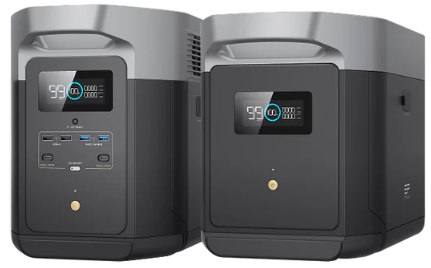
EcoFlow DELTA 2 Max
Best all-rounder. Fast charging, handles fridge surge easily, expandable.
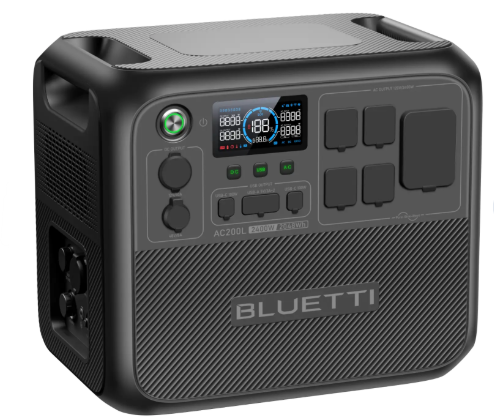
BLUETTI AC200L
Excellent solar input. Great if you want to pair with panels for extended outages.
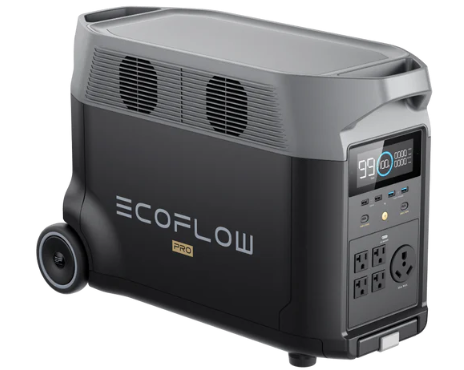
EcoFlow DELTA Pro
Maximum runtime. Can keep a fridge running well over 24 hours on a single charge.
6 Tips to Maximize Fridge Runtime During an Outage
Keep the door closed
Every opening lets cold air escape. Think before you open. Grab everything you need at once.
Use a fridge thermometer
If the internal temp stays below 4°C / 40°F, food is safe. A cheap thermometer removes the guesswork.
Move frozen items to the fridge
Frozen items act as ice packs and help keep the fridge cold longer. Pack them around perishables.
Know the 4-hour rule
USDA says perishable food held above 40°F for more than 2 hours should be discarded. Don't risk it.
Pre-charge your station
Keep your power station charged to at least 80% if storms are forecast. It takes hours to charge from flat.
Have solar panels ready
Even a 200W panel can recover 600+ Wh during a sunny day - enough to meaningfully extend fridge runtime.
Food Safety Cheat Sheet
What to keep and what to throw - based on USDA guidelines.
| Food | Safety Rule |
|---|---|
| 🥩Raw meat & poultry | Discard if above 40°F for 2+ hours |
| 🧀Milk & soft cheese | Discard if above 40°F for 2+ hours |
| 🥚Eggs | Discard if above 40°F for 2+ hours |
| 🍲Leftovers & cooked food | Discard if above 40°F for 2+ hours |
| 🧱Hard cheese | Generally safe - inspect for mold |
| 🍅Condiments (ketchup, mustard) | Usually fine - high acid content |
| 🧈Butter | Safe for a few hours unrefrigerated |
| 🍎Fresh fruit & veg | Safe without refrigeration short-term |
Power Outage Prep Checklist
Do these before storm season
Frequently Asked Questions
How long will a fridge stay cold without power?
A full, closed fridge stays safe for about 4 hours. A half-full freezer is good for about 24 hours, a full one for 48 hours. Opening the door significantly reduces these times.
What size power station do I need to run a fridge?
For a standard fridge, you need at least 1,000W continuous output (to handle startup surge) and 1,500+ Wh capacity for meaningful runtime. 2,000Wh is the sweet spot for 12–20 hours.
Can I plug my fridge directly into a power station?
Yes. Use a standard AC outlet on the power station. Make sure the station's surge rating exceeds your fridge's startup watts (typically 600–1,200W for a standard fridge).
Will a 1,000Wh power station run a fridge?
It can, but runtime will be limited to around 5–8 hours for a standard fridge. For serious outage preparedness, 2,000Wh+ is a better starting point.
Should I turn off the ice maker during an outage?
Yes. Ice makers can increase power consumption by 20–40%. During an outage, every watt-hour counts - disable it if possible.
Can I run a fridge and freezer at the same time?
Yes, if your power station has enough output (2,000W+ recommended) and capacity (2,500Wh+ for meaningful runtime). Both cycling together average around 200–300W.