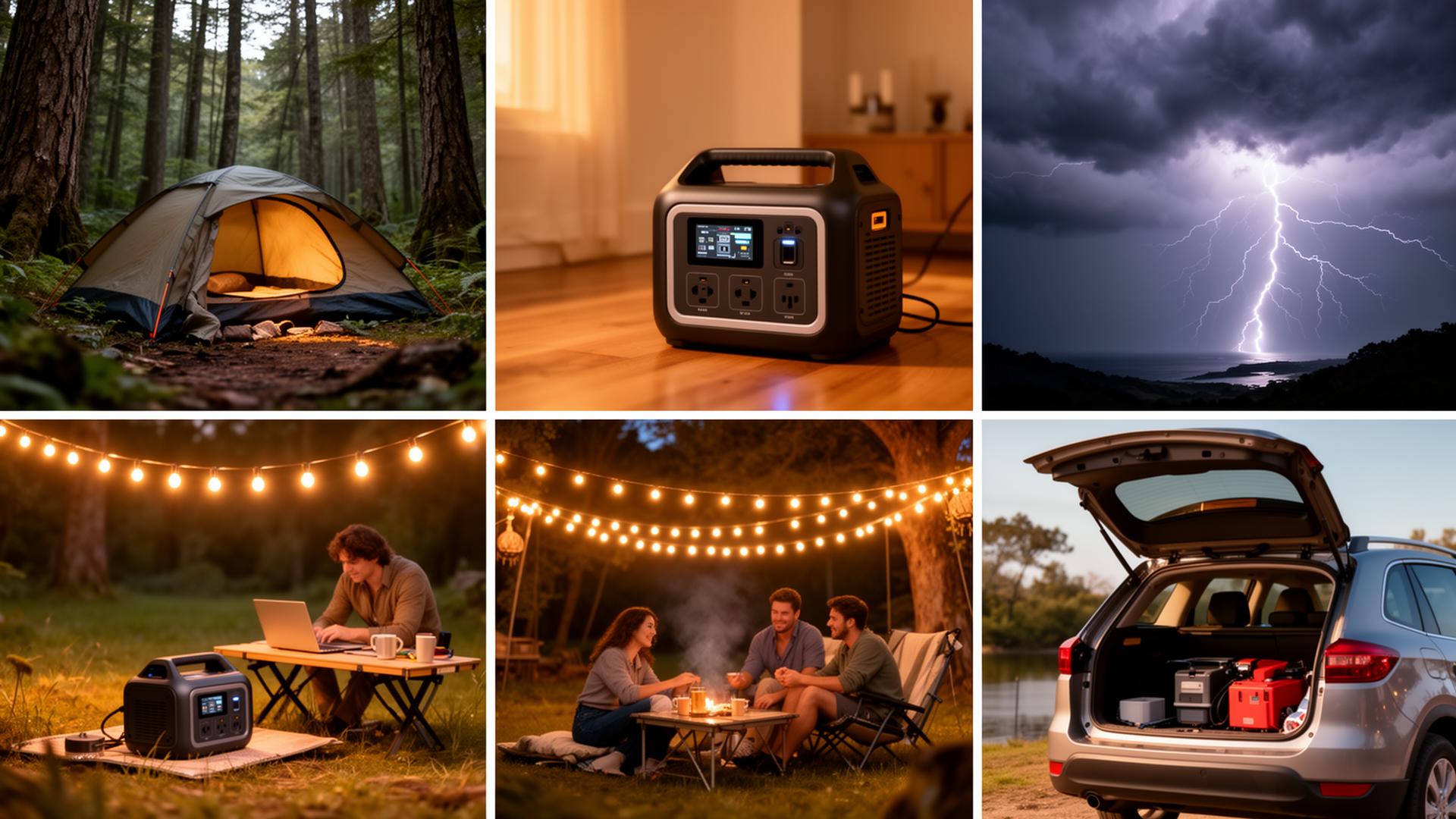
Why Portable Power Stations?
A portable power station is essentially a large rechargeable battery with built-in inverter, outlets, and USB ports. Unlike gas generators, they produce zero emissions, run silently, and are safe indoors. Charge them from the wall, your car, or solar panels - and you've got power anywhere, anytime.
Whether you're preparing for extreme weather, working remotely from a cabin, or tailgating on game day, portable power stations have evolved from niche gadgets into essential household tools. Here are the most popular use cases.
8 Ways People Use Portable Power
Click any card to explore a related guide.
Battery vs Generator: Quick Comparison
Wondering why not just get a gas generator? Here's the side-by-side.
Runtime Calculator
Select the appliances you'd power and see how long a battery station will last.
Popular Models by Capacity
Bigger isn't always better - match capacity to your actual needs.
5 Myths About Portable Power Stations
Let's clear up the most common misconceptions.
Myth: "They can run a whole house"
✓Most units power essentials (fridge, lights, devices) - not HVAC or ovens. Size accordingly.
Myth: "They last forever without maintenance"
✓Lithium batteries degrade over time. Expect 80% capacity after 2,500–3,500 cycles (6–10 years of typical use).
Myth: "Solar panels charge them instantly"
✓A 200W panel in full sun adds ~150 Wh/hr. A 2,000 Wh battery takes 10–14 hrs of sunlight to fully charge.
Myth: "They're too heavy to be portable"
✓Units from 500–1,000 Wh weigh 20–30 lbs - about the same as a carry-on suitcase.
Myth: "They're just expensive power banks"
✓Power stations deliver AC power (pure sine wave), handle high-wattage appliances, and offer solar input - far beyond USB power banks.
🛒 10-Step Buying Checklist
Tick off each step before you buy. Your progress is tracked below.